Refurbishment

Brighton Metropolitan College

Phase 2

The Challenge

Brighton Metropolitan College’s main teaching building was experiencing significant water ingress and required a comprehensive external refurbishment, including the installation of an over-cladding system. Safe and reliable access was needed to the full height of the superstructure to enable these works.

A key constraint was the building’s configuration: the elevation requiring access sat above a podium-level roof with very limited opportunities for scaffold foundations or back-propping. Compounding this challenge, the lecture theatres and study areas beneath the podium roof needed to remain fully operational throughout the works.

The primary challenge, therefore, was to develop a scaffold access solution capable of reaching the upper-level façade while avoiding load transfer onto sensitive areas below, maintaining uninterrupted use of the building, and ensuring the highest standards of safety and stability

The Solution

A carefully phased and highly coordinated scaffold strategy was developed to overcome the complex access and load-bearing constraints of the site, while keeping the college fully operational.

A loading bay was designed at podium level on the southern Phase 1 building roof. This structure was deliberately bridged between existing columns below, eliminating the need for back-propping within live teaching spaces. In addition to supporting scaffold erection, the loading bay provided a secure storage area for scaffold components and, later, permanent works materials.

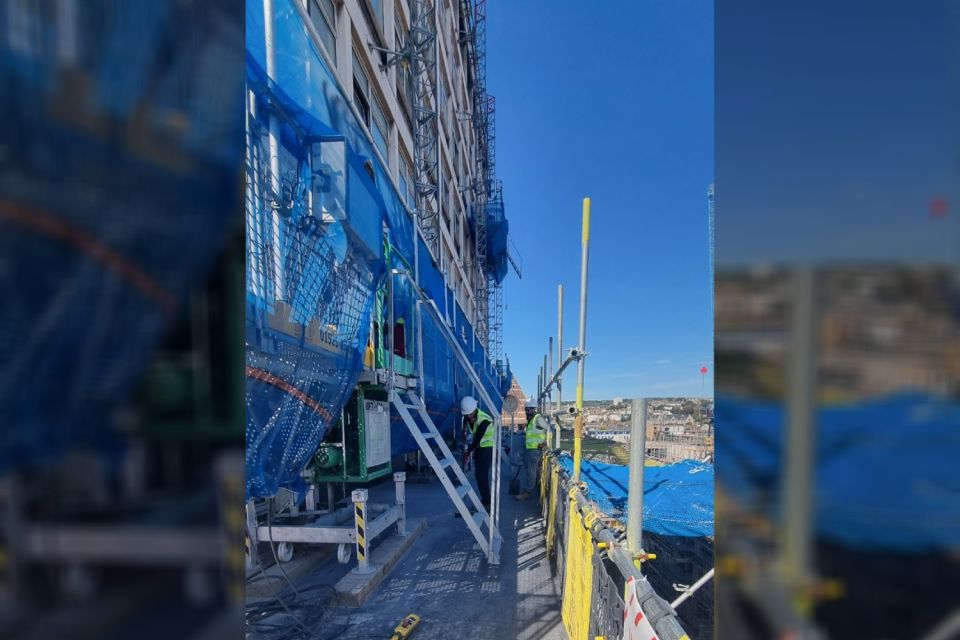
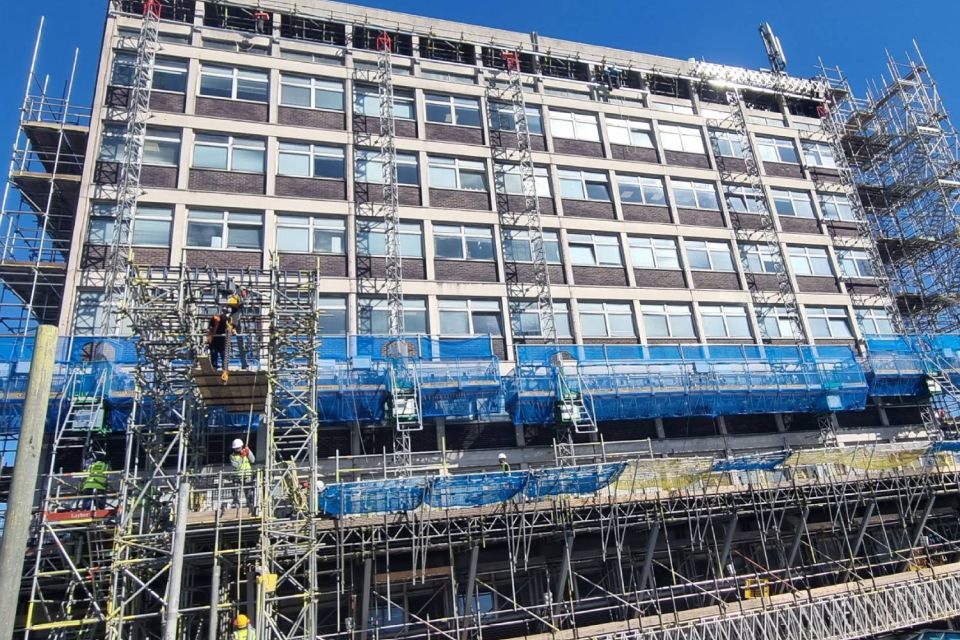
To enable scaffold installation above the fragile glazed low-level roofs, a cantilever-supported Niko running track was designed and erected at 11th-floor level. This track guided the precise installation of bridging beams to the east and west elevations. From these beams, access scaffolds were punched up to Level 5, allowing steel gallows brackets to be fixed into the concrete frame. These brackets then supported a scaffold gantry from which mast climbers could safely operate.

Access to the north and south elevations was achieved using independent scaffolding founded on steelwork tied back to designated strong points within the reinforced concrete frame below, ensuring structural stability without imposing loads on unsuitable areas.

To provide material handling and site access from ground level, a hoist run-off scaffold was designed at the north-west corner of the site. This structure bridged over the podium roof and cantilevered from a back-propped support, incorporating a lifting frame, loading bay, and staircase at its cantilevered end. This solution enabled efficient delivery of materials to Level 5 while maintaining safe access and egress for the site team.

The Result

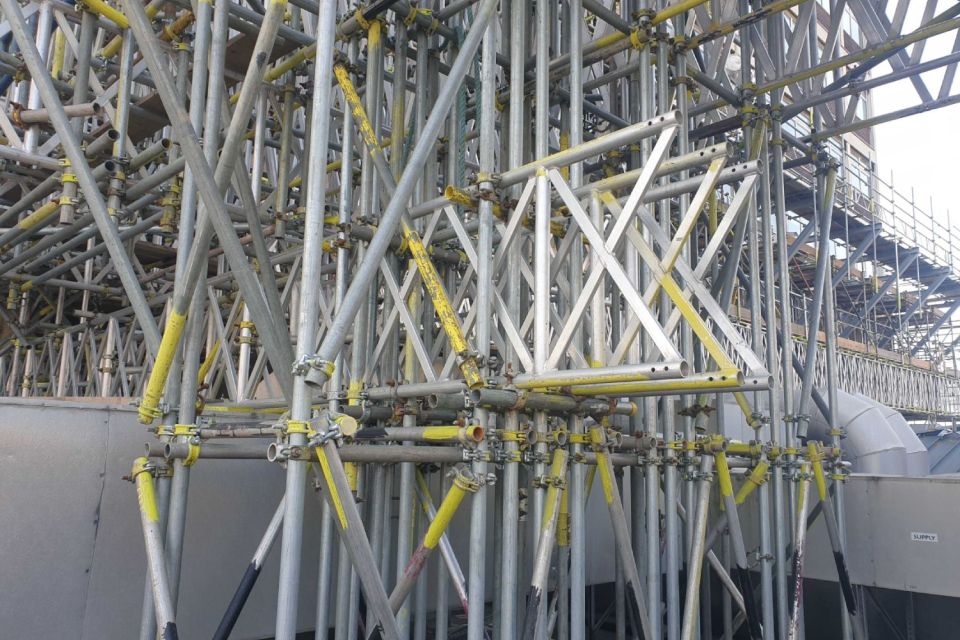
The adoption of scaffold bridging beams across all elevations significantly reduced the need for the originally proposed structural steelwork, delivering a more efficient and sustainable access solution without compromising safety or performance.

The access scaffolds to the east and west elevations were subsequently reconfigured and reused to support the over-cladding installation beneath gantry level. This was carefully coordinated with the phased removal of the steel gallows brackets, allowing works to progress seamlessly without additional temporary structures.

The scaffold gantries on the east and west elevations created continuous working zones for mast climbers operating between Level 5 and roof level (Level 12). At the same time, they maintained uninterrupted access and material transport routes to the building perimeter, enabling multiple trades to operate concurrently and keeping the refurbishment programme on track.